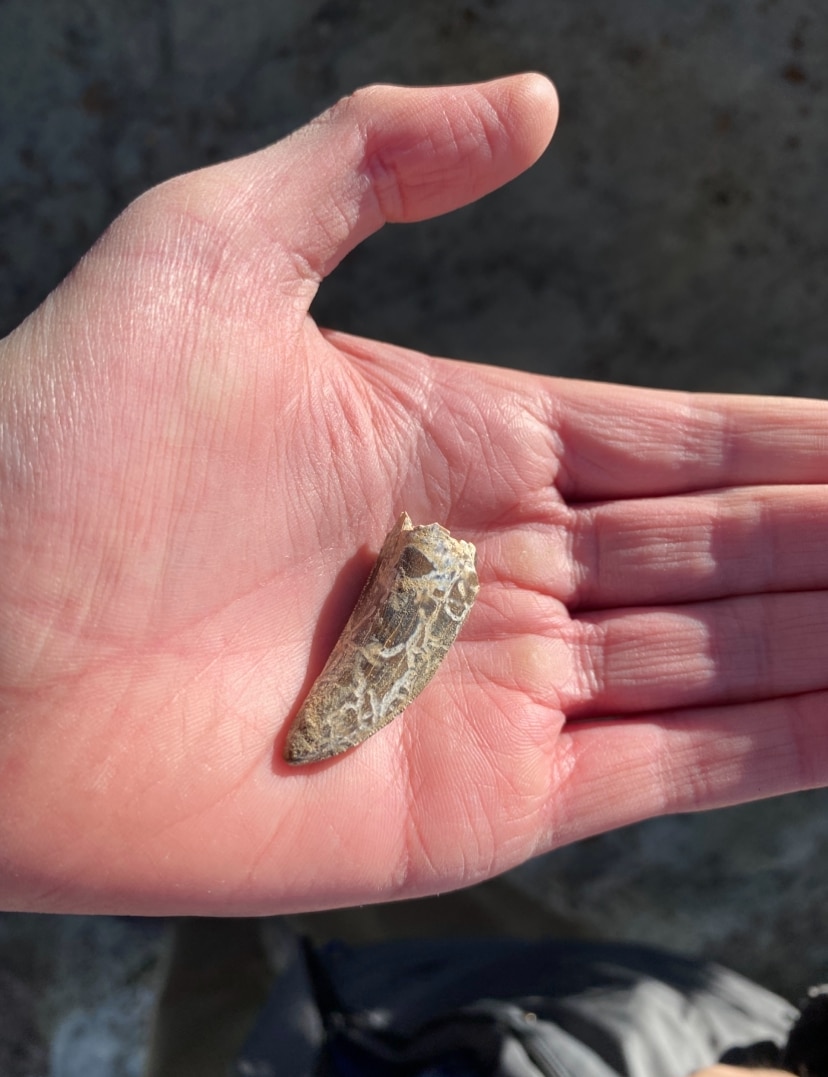
Cover Image: Large Theropod Tooth (Likely Albertosaurus)
Packing for Fossiling Trips
When preparing for fossiling trips, it's a good idea to pack the following:
- A large water bottle or bladder pack
- Back-up water
- Extra back-up water
- A lot of snacks
- Cool juice boxes
- A bag (preferably a backpack)
- Leather gloves
- First aid kit
- Cellular device and GPS (If you have one)
- Hat that provides shade
- Sunscreen
- Close-toed shoes (preferably hiking shoes or boots)
- Toilet paper
Useful Tips
Don't go fossiling in the rain or after recent rainfall. In the badlands you may encounter bentonite (see Figure 1), which used to be volcanic ash millions of years ago. When bentonite gets wet, it becomes extremely slippery. This can lead to dangerous situations, especially on a hillside. After it has rained, you should wait a few days for the bentonite to dry completely, because even if the surface looks dry, there may still be mud underneath and it could be very slippery.
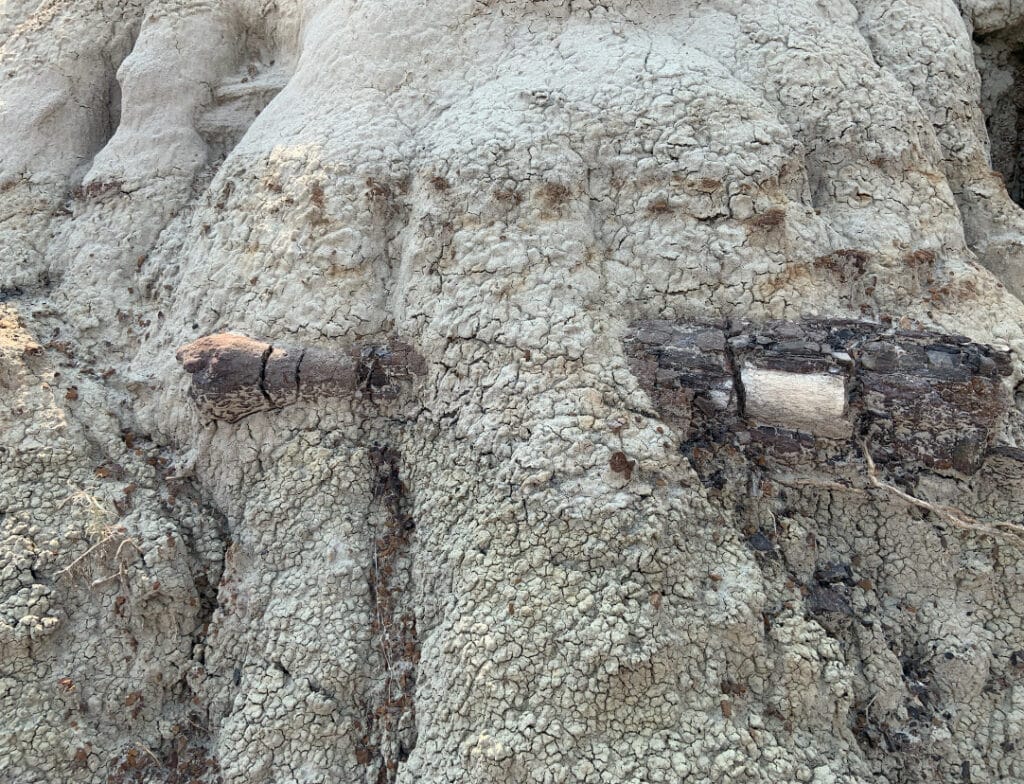
Figure 1: A fossil sticking out of the side of a hill, with a layer of bentonite below it and a big chunk of ironstone to the right.
Wear leather gloves while climbing hills. A common type of rock to find in the badlands is ironstone. Ironstone can be found in large chunks (Figure 1) or small pebbles (Figure 2). You will likely find lots of small pebbles while climbing hills and they can really scrape up your hands without gloves. Ironstone can also be pretty sharp when broken, so use gloves when holding a sharper piece.
Watch where you're sitting, kneeling, and putting your hands as well as your feet. Plains prickly pear cactus are common in the badlands and they are not fun to step on. Make sure that you watch out for them while on a trip. They're usually green and sometimes have a red tint; watch out for the greyer ones as they tend to blend in with the ground.
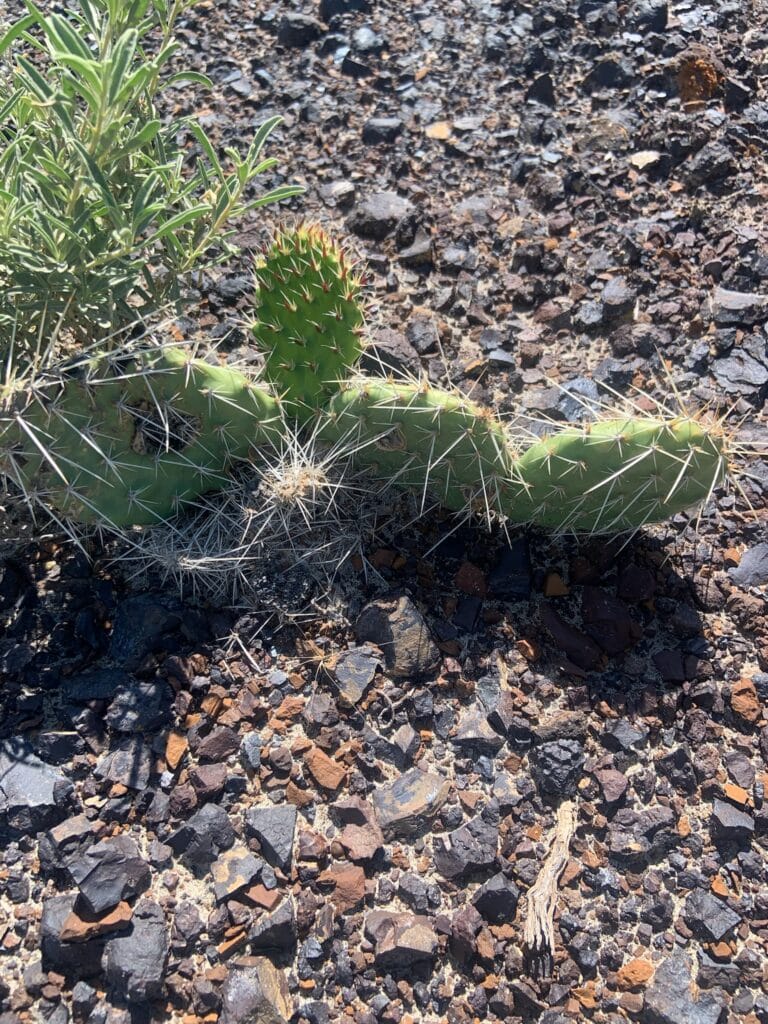
Figure 2: A Plains Prickly Pear cactus in the badlands with ironstone around it.
Try to go farther from roads and tourist attractions as these areas will be picked over and you likely won't find much.
Watch out for rattlesnakes. Depending on where you are going fossiling, there could be rattlesnakes in the area. The Drumheller area doesn't have any anymore but areas like Dinsoaur Provincial Park does so make sure you know what to do in an encounter with a rattlesnake should you stumble upon one.
Make sure that you know the laws about fossil collecting in your area. It can be illegal to collect fossils in protected areas, and in some provinces it may be illegal to dig up fossils from under the surface!
Look for a county map of the area you're going fossiling in. Some maps will have the names of the land owners so you can get in contact with them and obtain their permission before going onto their land!
What to Do if You Find a Fossil?
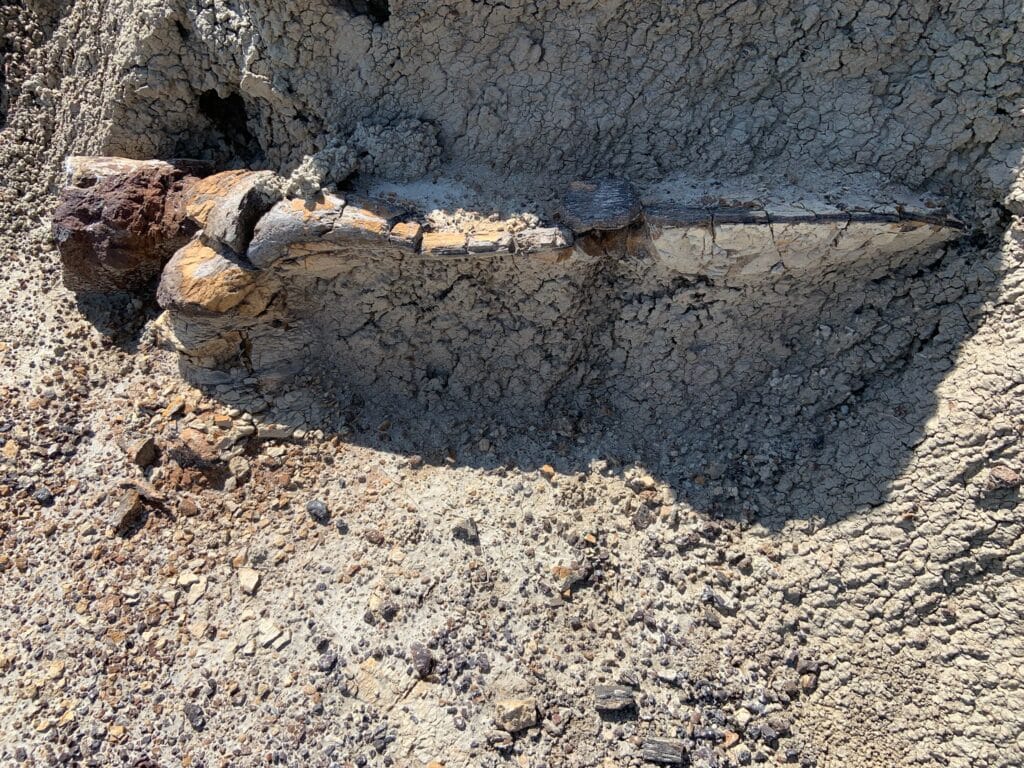
Figure 3: A large bone sticking out of the side of a hill in the Horseshoe Canyon formation.
Fossils fragments in the badlands are usually on the smaller side, but large chunks can also be found. If many fossil fragments have been found on the ground at the bottom of a hill, it may be worth it to start following the trail of fossil bits up the hill. Sometimes after following the fragments you may find a larger fossil sticking out of the side of the hill (see Figure 3), but there's no guarantee. If you do find a large bone at a certain level, look around at that same level in case there are other fossils sticking out that you didn't see before. Remember to know the laws around fossil collection in your area in case it is illegal to do certain things like dig up fossils. You can also report your findings to museums; they will likely have an email for that on their website. It is important to know that some species are a lot more common than others. If you've found a hadrosaur and report it to a museum, they may not be too interested in it since they already have a lot of hadrosaurs. That said, it's still a good idea to report nice finds just in case. If your area gets snowfall, consider protecting your fossils with tarps or plastic bags so that no water can damage the fossil. Make sure to use rocks to keep the covers down so they don't blow away and hurt the environment! You might also make a channel to redirect the water around the fossils.
Where Is the Best Place to Find Fossils?
For the best chance of finding fossils, you want to go to places with lots of exposed erosion. Less eroded areas can also yield good finds, and you will likely still find a decent amount of fossils. In Figure 4, below, the left side of the river by Orkney Viewpoint has less exposed erosion so fewer fossils would be found there. The right side by Horsethief Canyon has a lot more eroding surface area so more fossils would be found there. (Note that I've just used these areas as examples. They are quite picked over and I would recommend that you chose a less touristy area.)
It is also important to know the formation from which you are getting fossils so that you know how old they are and what species they may come from. You can find information about the different species of a certain formation using Google; just remember to use reliable sites!

Figure 4: View of badlands just upstream of Drumheller. Credit to Google Earth for the photo.
Now that you know these tips, you should be ready for your very own fossiling trips! Have fun exploring, be careful, and best of luck on your finds!